Reactions to “The Life of A Showgirl”, Taylor Swift’s new album, have been quite mixed, and while Swift as an artist tends to be polarizing among people, the public opinion regarding the album seems to be more negative than ever before. Despite this, the album has done exceptionally well and has even broken records, such as the most sales and streams of an album within its first week of becoming available. Throughout the album, Swift makes references to a slew of literary works, pop culture happenings and historical events, with the most obvious being the allusion to Shakespeare’s “Hamlet.”
“Hamlet” is one of Shakespeare’s most well-known plays, following the themes of morality, deception, revenge and duty. It is about a Danish prince who seeks revenge against his uncle, who killed his father. Ophelia, the love interest of Hamlet, is ordered to stay away from him by her father and brother. She is torn between her love for Hamlet and her duty to her family, but as a result of Hamlet’s plan and feigned madness, he rejects her. When Hamlet accidentally kills her father, Ophelia is driven to madness herself and drowns in a river, singing after collecting wildflowers.
Ophelia is often used as a symbol for innocence gone mad, and the variety of flowers she collects is a motif for the many ways that she has to change to be accepted in a world of men. Other artists, such as The Lumineers, the Grateful Dead and Bob Dylan, have also included the symbol of Ophelia in their music, but none have done so in such a direct reference.
In “Showgirl”, Swift often hints at the idea that, like Ophelia, she had to put on many fake personalities throughout her career. In contrast to the ending of Shakespeare’s story, however, the ending of Swift’s story is a happy one where she can be herself because she found her true love. In her song “The Fate of Ophelia”, the line “you saved me from the fate of Ophelia” refers to her relationship with Travis Kelce, and how, because of him, she was saved from madness and eventual death.
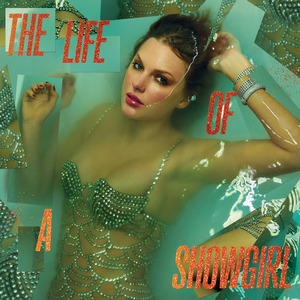
The album cover is also a reference to both Hamlet and art history. The album cover features a picture of Swift in a bathtub, posed similarly to Ophelia in the painting “Ophelia” by John Everett Millais. In both the cover and the painting, the women have a relaxed pose in which they seem unbothered and carefree, floating in the water. Millais depicts Ophelia just moments before her drowning, though the context of Swift’s cover is very different. It’s implied that Swift just performed and is washing up afterwards. While both the painting and the cover show the women in very vulnerable positions, the context behind them tell very different stories.
The connections between Swift and Shakespeare don’t stop there, as some regard Swift as a modern-day Shakespeare. It’s essentially undeniable that Swift has a talent for writing lyrics that are not only catchy but harbor deep meanings. The depth and complexity of Swift’s lyrics are comparable to that of Shakepeare’s work, scholars such as Sir Jonathan Bate, a former Shakespeare professor, noted. Additionally, Swift tells stories in her songs and albums that reflect on a variety of topics, similar to Shakespeare’s plays, poems, and sonnets.
Although it’s clear what Swift drew inspiration from in “Showgirl,” it’s not always as obvious what the deeper meaning behind her references are. Looking into the full context of them reveals Swift’s intentions as well as the true genius of each song and album. While the quality of her music can be debated, boiled down to a matter of preference, the same can not be said for her writing. Swift has already indicated that “Showgirl” will not be her last album, so until her next, critics will have to continue deciphering this one.