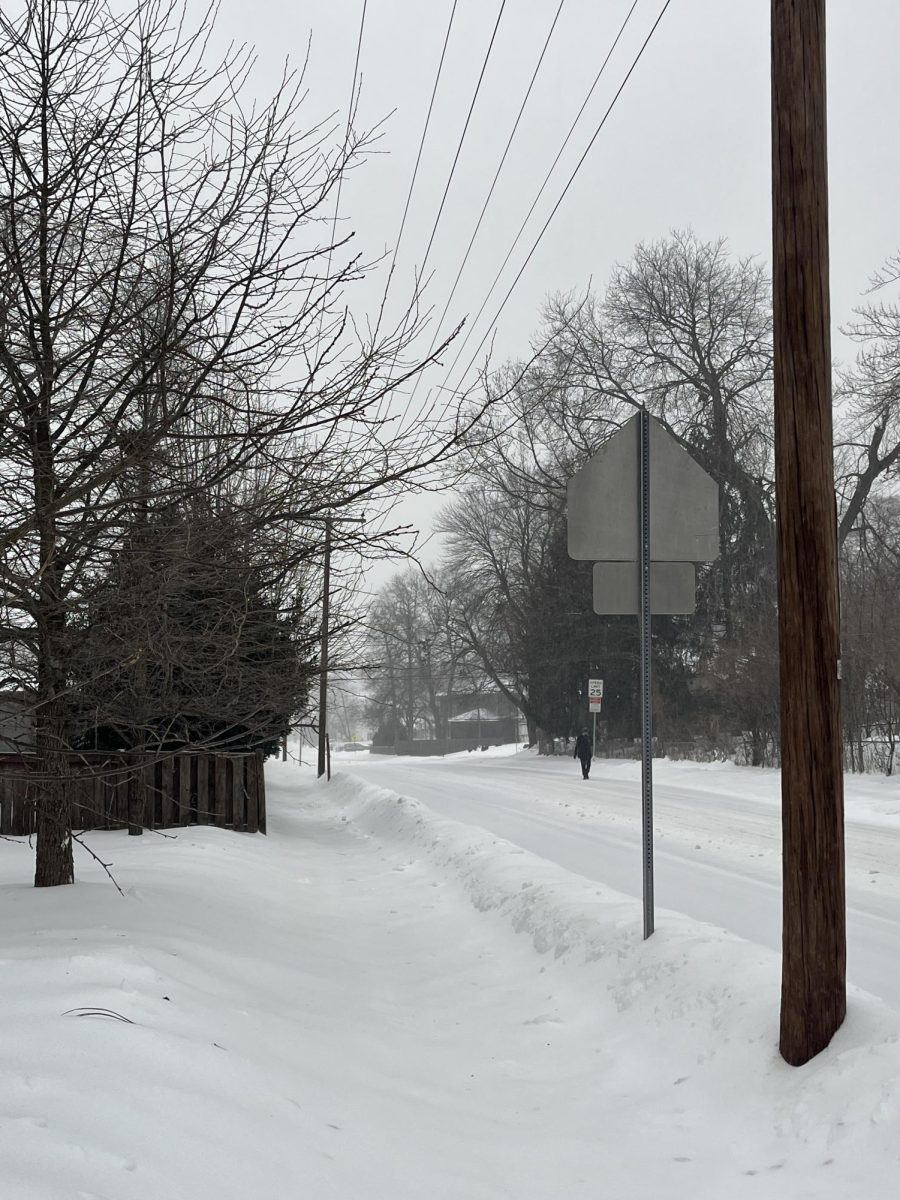
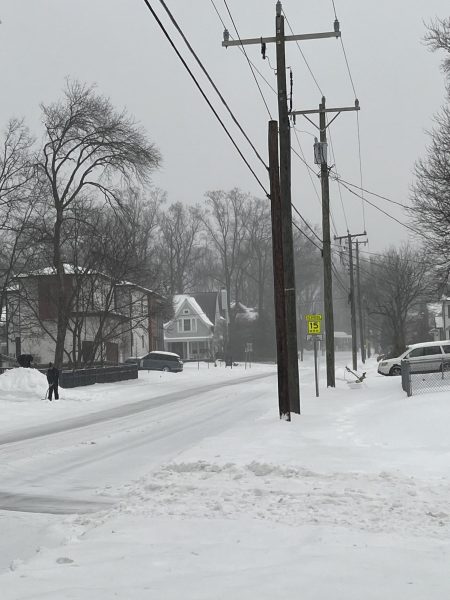
As the daily morning alarm rings, students across the county peer outside their windows in anticipation, taking in the fresh blanket of powder. Tucking themselves back into bed, students flock to the FCPS website, all thinking the same thing: snow day.
The anticipation of waiting for a weather delay is something every student experiences. However, many students don’t know exactly how to predict whether or not school will be cancelled.
“This year it feels really random,” August Tang (’26) said. “Sometimes it feels stingy and other times they delay or cancel for no reason.”
That confusion has left many students wondering about what actually goes into the decision-making process. With no clear pattern from storm to storm, students are left guessing whether icy roads or light flurries will be enough to earn their day off.
“The cancellations and delays were really inconsistent in the past, so it became really hard to predict,” Yanni Gougifkas (’27) said.
However, there may be a way to predict FCPS weather delays: an X account titled “FCPS Closure Odds” hosts a Google Spreadsheet detailing percentage odds for delays and cancellations. Since 2019, the account–run by a FCPS alumni– has correctly predicted 100% of potential weather delays since the 2019-2020 school year, even accurately citing the reason for the delay.
“I personally have never been able to predict it,” Owen Cobb (’26) said. “Sometimes I stay awake all night thinking we’ll have off and then we have school.”
According to the “FCPS Closure Odds” X page, the decision of whether or not to cancel school is not only dependent on snow accumulation; in fact, one of the most important factors is transportation-based. With over 1,600 school buses, FCPS boasts an extensive transportation network, but a large number of vehicles is synonymous with a large amount of risk–particularly during snowy weather. FCPS officials prioritize the safety of roads over only the sheer accumulation of snow when deciding school cancellation. For example, even with multiple inches of accumulated snow, if a majority of FCPS bus routes are still driveable for buses, school is likely to continue, regardless of other conditions.
“I took the bus a lot my freshman and junior year, and when it was cold, it was really easy to slip on the way to the bus stop,” Zakaria Najmedine (’26) said.
The second most cited reason for school cancellation is, still, not snow accumulation. Rather, it is timing. Snow that falls overnight presents a different challenge than snow that falls during the day. In addition to evaluating the safety of conditions early in the day, officials must decide whether or not conditions may worsen while students are at school, complicating dismissal procedures.
“Sometimes I really do wake up and look outside thinking we will have school, but then it’s cancelled anyway, and I don’t really understand that,” Katie Penna (’26) said.
However, the final say is given by Superintendent Reid. After being informed of the transportation situation, forecast of the day, and prior snow accumulation, she makes a decision by 4:30 a.m. the morning of the cancellation.
“I never really understand why they can’t make a decision the night before so I can know before I sleep, but there are reasons, I guess,” Oscar Zhou (’26) said.
This hidden complexity can make the decision look random to many FCPS students. However, the decision of whether or not to cancel school is more a data-driven predictive tool than a crystal ball.
“To be honest, I think they just spin a wheel, but you believe what you want,” Hunter Guthrie (’26) said.