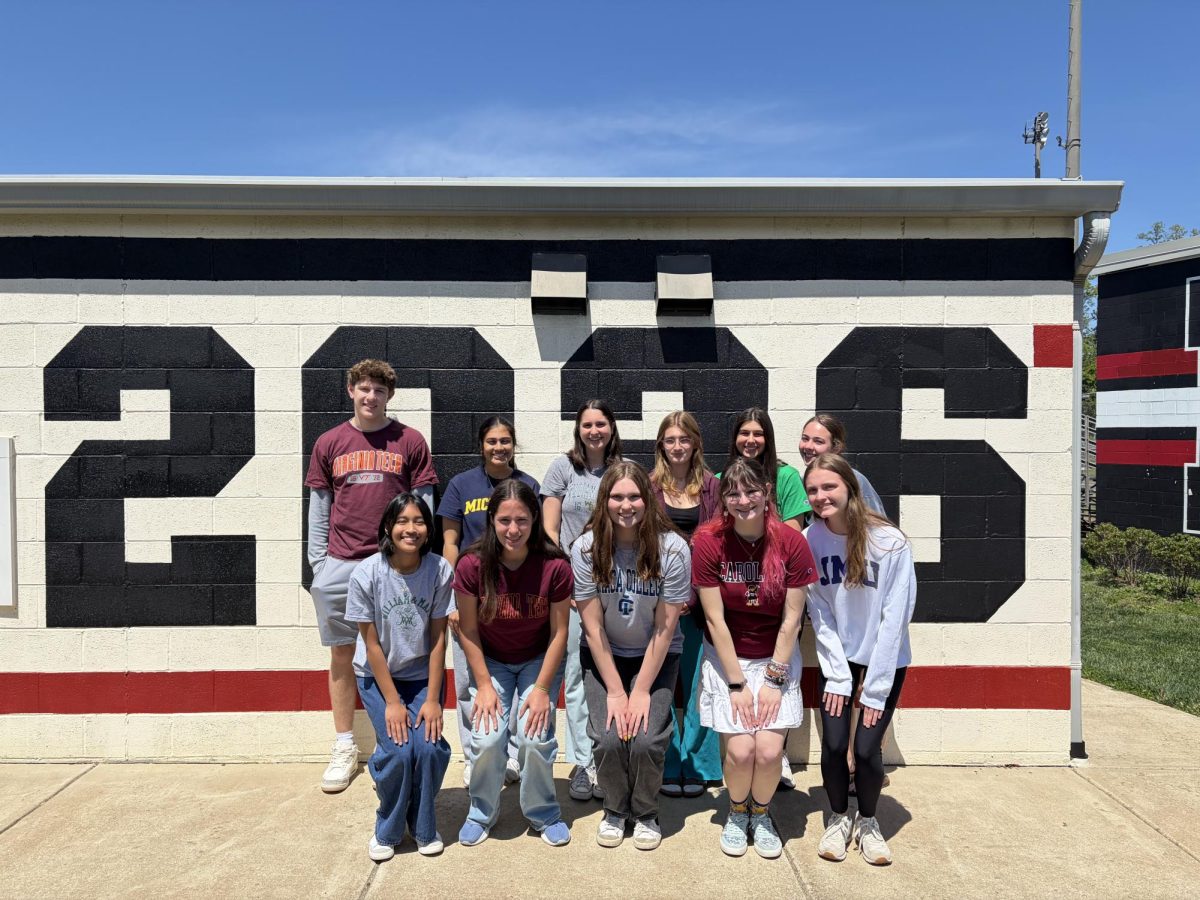

Every year, thousands of Distributive Education Clubs of America (DECA) students spend months preparing for one of the biggest business competitions in the world, the International Career Development Conference (ICDC) hoping to improve their leadership and business skills. For many first-time competitors in DECA, ICDC can be nerve wracking, but also exciting.
“ICDC is a big step up,” said DECA coach, Lara Booher. “Especially for freshmen, it’s the process of learning and gaining experience.”
Preparing for ICDC takes months of effort, even for new members still adjusting to high school. Students make presentations, study their business concepts and improve their public speaking skills while also balancing school and other extracurricular activities. Alex Chung (’29), who placed second at his first competition along with his partners, Sean Ying (’29) and Kellan Harrison (’29), agrees.
“After doing well early on, we wanted to improve,” Chung said. “We realized that even as freshmen, we could compete at higher levels if we put in the work.”
Competitors practice various events such as marketing, entrepreneurship, hospitality and finance. Many of these students spend hours timing their presentations, reviewing case studies and preparing for whatever questions the judges might have.
Preparation often means long hours outside of school, sports and homework. Audrey Crane (’29) described spending her evenings editing her presentation and repeatedly practicing.
“There were definitely late nights,” Crane said. “Sometimes it was hard to keep up, but it was all worth it for the amazing experience.”
Many freshmen are still figuring out how to adjust to high school schedules while managing homework, sports, clubs and social lives. Preparing for ICDC on top of all these responsibilities can make time management difficult.
For some freshmen, DECA offers more than just competition. Cybelle Tran (’29) chose to focus on leadership rather than competing in ICDC this year.
“I wanted to help support the team and be involved in a different way, while learning important leadership skills,” Tran said.
DECA also gives students the opportunity to grow as leaders both inside and outside of the competition. Members learn how to communicate stronger, work with teammates and take responsibility during projects. Through preparing for competition and speaking in front of different judges, many freshmen develop leadership and confidence skills that carry into the classroom and other extracurriculars.
Tran’s role highlights how DECA allows students to grow in multiple ways, not just through events. Balancing DECA with schoolwork, especially in the peak of the school year, is one of the biggest challenges for first-year members. Between homework, tests and extracurriculars, time management becomes essential.
“It’s definitely hard to keep up sometimes,” Harrison said. “You have to plan ahead and stay organized. As freshmen, we are new to this and we are trying to [get] the gist of it.”
Booher noted that this balancing act is where much of the growth happens.
“Freshmen come in not knowing what to expect,” Booher said. “But through DECA, they learn responsibility, communication and confidence. Growth isn’t always measured by awards, but their progress along the way.”
Despite the challenges, many freshmen find the experience rewarding.
“I’ve learned how to speak more confidently and think on the spot,” Ying said. “It pushed me out of my comfort zone, and I can’t wait for many more years to come.”
Although preparing for ICDC can be time consuming and stressful, many believe the experience helps them grow as a competitor and more importantly as a person. Through leadership, teamwork and communication, freshmen learn lessons that extend far beyond the stage with this experience.
“I will always remember my first DECA experience,” Taylor Shelburn (’26), president of DECA, said. “You learn so much from only knowing so little.”