Every day, probably without thinking, you hang up the phone, you film a video, you tape a show. You tell someone they sound like a broken record.
Oddly enough, none of those phrases are literally correct anymore. Yet, you say them anyway, and everyone understands exactly what you mean. These are phrases and expressions that have outlived the technology that created them.
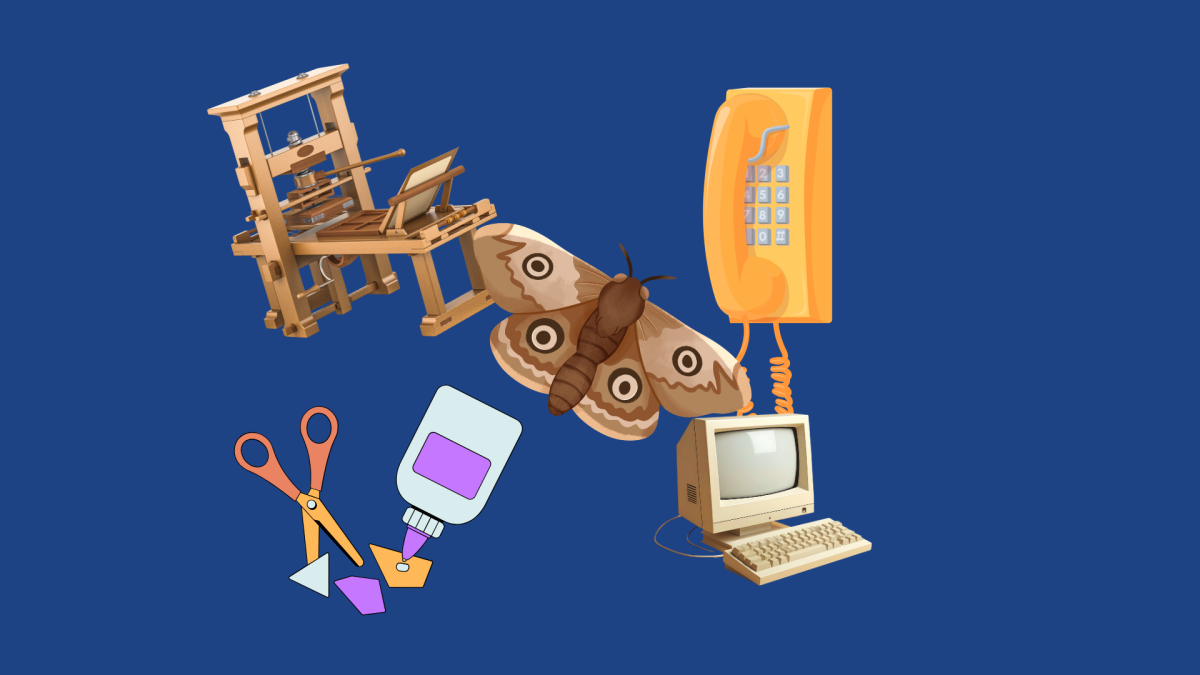
Take “hang up” as an example. Early telephones had a hook on a wall. When a call ended, one placed the receiver on the hook, physically hanging it up, breaking the circuit and ending the call. Today, according to the Centers for Disease Control and Prevention, nearly 80% of Americans live in wireless-only households. No hook or receiver, yet we still “hang up.”
Or consider the phrases “uppercase” and “lowercase.” Before digital typing, printers had metal letters in wooden cases. Capital letters lived in the upper case, while lower letters were in the lower case. Nobody has touched a type case in decades, yet the phrase remains incredibly common.
“Cut and paste” once meant scissors and glue. A “bug” in software is named after an actual moth that was found dead inside a computer in the 1940s.
This pattern has become a phenomenon. The tool disappears, the phrase stays. Humans inherit the vocabulary of people who lived completely different lives from us, and use it everyday without a second thought. Words store memories of the physical world long after the world has moved on with its new technology.