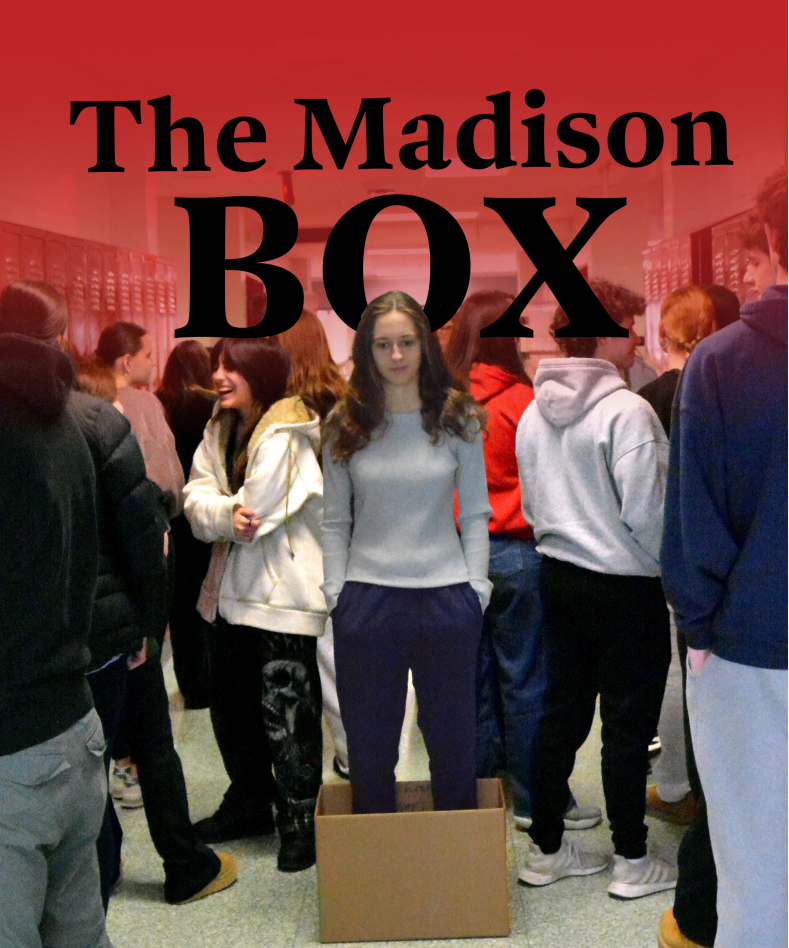
When Mia Koenen (’29) walked into her class on the first day of school, she immediately noticed one thing: every seat, every desk in the room had a student. The total number of students in the class added up to 32, with only one teacher to manage them all. However, this isn’t unique to Koenen’s class; over 57% of students have noticed such changes this year, due to budget cuts from both the federal and state level.
According to FCPS’s budget for fiscal year (FY) 2026, 95.8% of its initial revenue comes from a combination of county and state funding. The largest share (70.6%) of the budget is allocated directly from Fairfax County via the county transfer, which is primarily funded through property and income taxes. This system has worked in the past, but as more and more people leave Fairfax County due to job losses in the federal government, funds are decreasing and impacting schools across the county.
“This year, there was quite a shortfall in the amount of money that the county transferred over,” Principal Elizabeth Calvert said. The transferred funds cover teachers’ salaries and instructional expenses, including textbooks, materials, and other educational resources.
One reason why FCPS is experiencing a lack of funds is that the state didn’t contribute as much money to the schools as in the past, and the deficit has been accumulating.
“State budget decisions are the result of many factors, including current available funds received through tax revenue; laws already in place that require funded initiative [and] unpredictable situations that occur [and] require immediate attention; availability of other sources of funding–like from the federal government–and a variety of different political interests,” Melanie Meren, the Hunter Mill District Representative on the Fairfax County School Board, said. “It wasn’t until 2023 that a state-produced report showed just how drastic the underfunding is, and that the use of out-of-date funding methods is contributing to the underfunding of students’ education.”
In addition to the $121 million budget deficit FCPS is already undergoing, the Department of Education (DOE), following President Donald Trump’s guidance and executive orders, threatened FCPS in February to withhold over $169 million in grant funding for alleged Title IX violations–the statute that protects against sex-based discrimination, violence, and harassment in any education programs–over their restroom and gender policies. In response, FCPS filed a lawsuit against the DOE. The outcome remains uncertain as of publication. If the DOE wins the suit, Fairfax County will need to make up those funds from the county’s budget, but on Oct. 1, the Fourth Circuit Court of Appeals denied FCPS’ emergency motion for an injunction while the lawsuit is decided, which would have prevented the DOE from denying money to FCPS. The funds to be withheld by the DOE are designated for specific programs, such as Special Education, Multilingual Learners, and Title I schools, which are schools where the majority of students qualify for free or reduced-price lunches. In Title I schools, the grants provide funding for school lunches and resources to help students develop essential skills like reading and writing.
“There’s a variety of buckets of money that come from different sources…so, like, your money for multi-language learners, that’s one bucket of money,” Calvert said. “Students who have IEPs, that’s another bucket of money, and then you have general education funding. That’s more or less the big buckets.”
Because these funds and programs are so vital, they cannot be cut, meaning money will have to be reallocated from other areas, such as teachers’ salaries and instructional supplies. Currently, the county has not yet provided Madison with a firm budget figure, leading the school administration to prepare as cautiously as possible for potential shortfalls.
However, some numbers are known to be lacking, such as funding for teachers’ salaries. Last year, the two major teacher unions, the Fairfax Educations Unions (FEU), which comprises the two teachers unions in FCPS, negotiated a salary increase, which was approved and went into effect this fiscal year. However, due to budget constraints, the raise was reduced from 7% to 6% for union members. Additionally, the county can only supply funds based on a specific student-to-teacher ratio—about 32 students per teacher—a figure significantly higher than previous years.
“We had to raise class sizes, [which] forced us to offer fewer sections of many courses,” Tim Buckley, Director of Student Services, said.
Therefore, the fewer classes offered means the less FCPS has to pay teachers. Fewer classes also mean a higher number of students per class.
With this higher ratio, the math department has been hit the hardest, seeing two math teachers retire last year and not be replaced.
“In math in particular, we had somebody in line to hire, and we were told we couldn’t hire anymore,” Calvert said. Since the math department is short on teachers, current teachers have had to take on more classes, which are larger in size.
“It’s been really difficult, especially when it comes to math; students really benefit from smaller class sizes,” math department chair, Susan Moy, said. Moy also explained how her workload has increased because of these changes, and her planning periods during school hours have been significantly reduced as well.
Moreover, to maintain current salaries, some classes have been moved online or eliminated. This is seen in courses with lower student interest, such as French 5, AP French, Geospatial Analysis DE, AP African American Studies, Combating Intolerance and Spanish Heritage Speakers.
“We determined it was better to keep French 1, because if you cut French 1, then you’d kill the program,” Buckley said.
Both French 5 and AP French are covered in one class, which is not offered at Madison this year, requiring students interested in this course to now have to take it online. While necessary, many AP French students professed outrage at this decision, as taking an online language class poses a few unique challenges.
“Certain parts of the class have been far more difficult than I feel would have been in an in person setting. Things like writing and reading have become harder in the online class than before because even with smaller classes…if you don’t understand something or you forget something, you kind of just have to figure it out,” Ken Chapman (‘26), an AP French student, said.
Because the budget is not certain and Madison is preparing for the worst, instructional funds are also being held tight. According to FCPS guidelines, AP class textbooks must be replaced every 10 years, but this year, 20 11-year-old AP Biology textbooks are still in use because of the limited budget. As there are very few differences between the new and old textbooks, aside from wear and tear, renewal of these books is not entirely necessary, but the inability to replace the books is a precursor to harsher cuts that could occur if money is further withheld.
“The science department is being impacted in other ways,” science department chair, Scott Hazen, said. “With the financial cuts occurring around the county, the ability of my department to purchase consumables and craft materials for project-based learning has been impacted.”
The social studies department is another that is facing hardships because of these budget cuts. Many non-essential instructional materials, such as textbooks, are being delayed in purchase. The county put together a committee to decide on new materials and textbooks that would be used, which was a three-year-long process. The new materials were supposed to be purchased last year but have been delayed because FCPS isn’t in a position to spend money on them at this time.
“It doesn’t affect all of the classes, not the ones that already have textbooks; however, it affects AP Human Geography because we’ve never had textbooks for that class since it’s brand new,” social studies department chair, Dan Blanchet, said. “AP Psychology is also at a disadvantage because new textbooks have not been purchased since the AP course has been rewritten, so they are not learning the updated curriculum.”
Similar to the math, language, social studies and science departments, the English department has been affected by the tighter budget. Like the other departments, the English department has had a slight shortage of classroom supplies this year compared to other years, but the more concerning effect is on ordering new books for the classrooms. Due to the tight budget, the department is currently focusing on ordering essential books. Not only has the English department felt the effects of the budget, but also English departments across the county.
“I’ve certainly noticed other English department chairs, for example, writing to one another, asking to borrow books, maybe when their schools previously purchased these books,” English department chair, Sarah Payne, said. “We loaned some books to Centerville, for example.”
Madison is very fortunate; “Luckily, Ms. Calvert and Ms. Taylor have been generous by purchasing a lot of books in the past few years,” Payne said.
In addition to the departments having to adjust to the budget, the Madison Mentors program has been funded by a combination of grants, funding from philanthropic organizations and the PTSA for the last four to five years. The program is designed to help freshmen get acclimated to high school by pairing them with an upperclassman who guides them and does activities with them throughout the school year. This situation exemplifies how just the budget deficit has caused difficulties in trying to keep programs like Madison Mentors running but also making sure there is money for textbooks and basic classroom necessities.
Although these myriad of cuts would be harsh and difficult to handle, it must be stated that Madison is, and would be, hit significantly less than other schools in FCPS. Title I schools, such as Cunningham Park Elementary School, would be most affected by the withholding of federal funds. These funds help support programs for vulnerable students, such as free and reduced-price school lunches and special education. FCPS needs to cover these, however, so funds are taken from other “buckets” of money, such as teacher salaries or instructional funds.
With the future, financial or otherwise, uncertain, it’s hard to tell what next year will look like as it relates to the funding issues the county is facing. Considered all together, the impact on Madison caused by the budget cuts and shortfalls are fairly significant, and, already, have caused frustration and discouragement among the student and teacher bodies.
When reflecting on the changes of this fiscal year as a whole, Calvert said “…the way you build a society is all around education. I mean, Thomas Jefferson talked about it, right? I mean, it’s the cornerstone of a democracy… to pull funding from something that is so crazy vital, I shake my head. I have no words to describe it.”