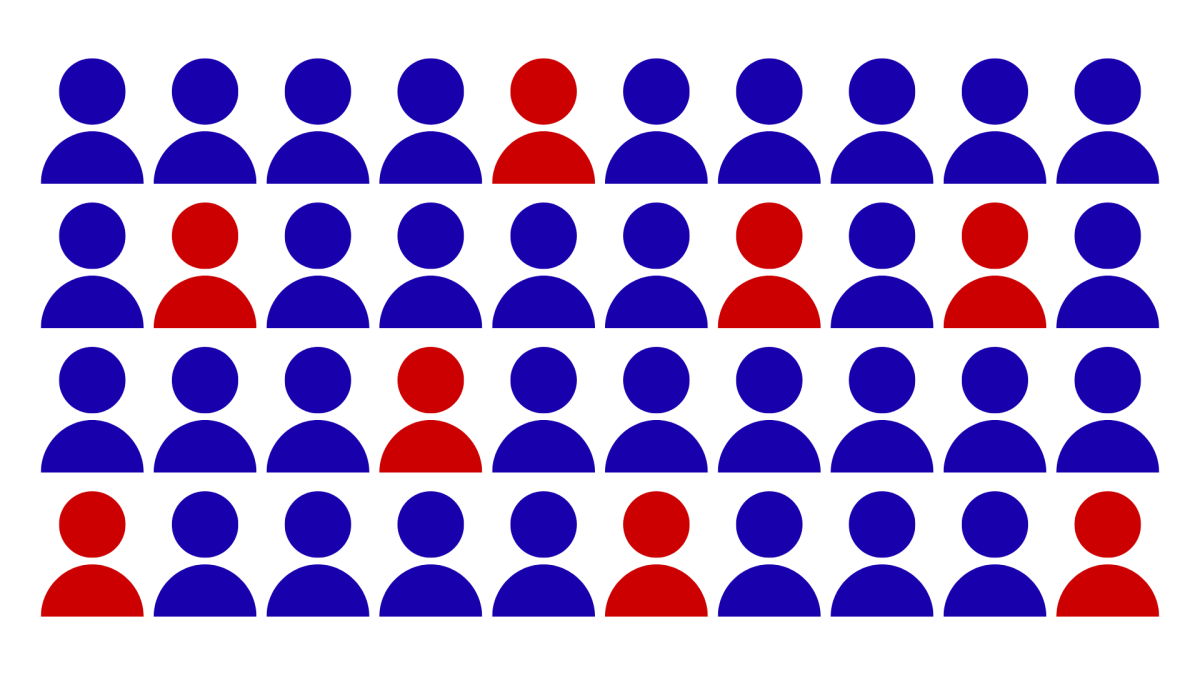
Democratic yard signs litter the lawns of Vienna during election season; their bright cerulean a stark contrast from the frequently watered grass. An occasional pop of red catches the eye, surprising passersbys as they peruse the streets. This is no different from the political climate at Madison, where only a Young Democrats Club exists, and the lack of Republican representation is noticeable.
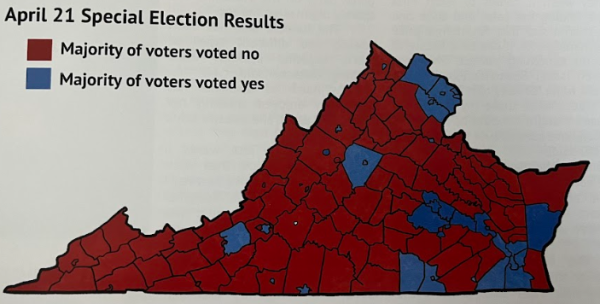
This liberal bubble is opposite to the rest of the state of Virginia, which is primarily conservative outside of major cities. Northern Virginia’s large, liberal population typically sways statewide election results blue. In addition, following the passage of the Virginia Congressional redistricting plan, Democrats’ control of Virginia will likely have a national impact. It makes it easier for Democrats to win 10 out of 11 Congressional districts. While it has been challenged in courts, the support it earned to pass it, specifically from Northern Virginia, highlights how liberal this part of the state truly is.
Vienna is no exception. As evidenced by recent election results, the Vienna political climate is clearly very liberal. The Madison pyramid is made up of several voting precincts, each of which reported between 60% and 80% of voters voting for Abigail Spanberger in the 2025 Virginia Gubernatorial Election. Additionally, according to the Vienna Patch, 65.45% of votes went to Kamala Harris in the 2024 Presidential election.
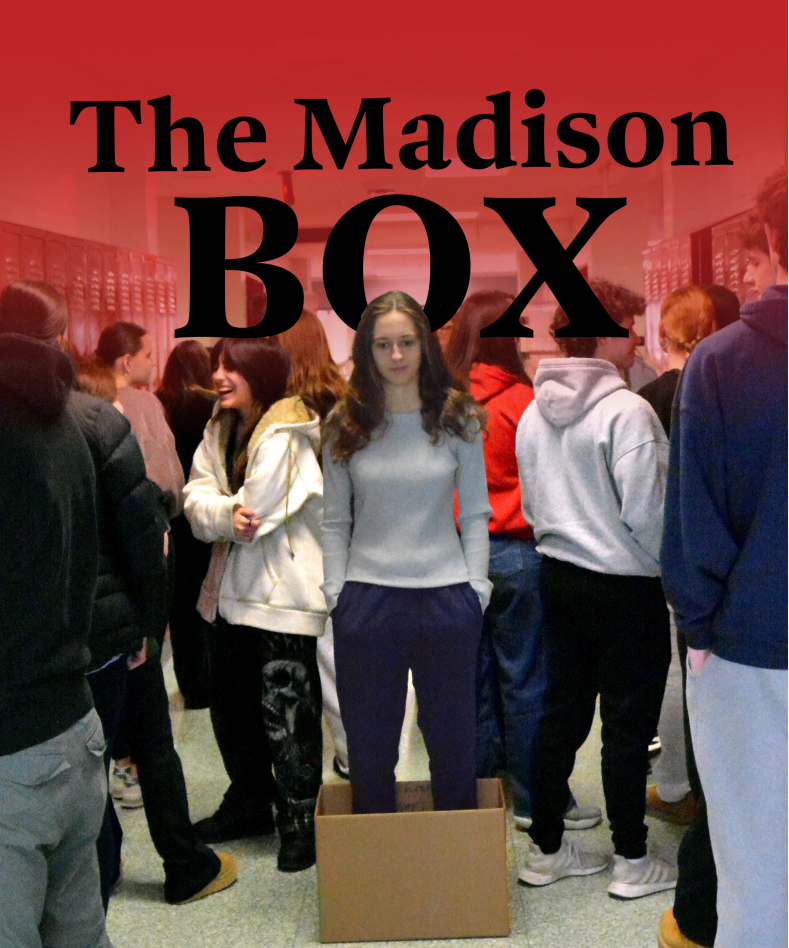
Madison, too, is plagued by a lack of outward political diversity; it has been described as an echochamber, often causing students to conceal their true political alignments. As the fear of consequences for sharing political opinions increases, the student body has become quieter and quieter about their different viewpoints for fear of judgment or exclusion.
“I think keeping up with politics is important, but sharing political beliefs in school just causes arguments and unnecessary judgment,” Will Cretal (’26) said.
Cretal identified himself as leaning slightly to the right on the political spectrum and mainly developed his beliefs from his father. He feels he is well-informed, but generally chooses not to share his political beliefs.
“I try to keep my beliefs to myself because a lot of people have different opinions, and I don’t want to influence others to share the same beliefs as me,” Cretal said. “I think politics don’t belong in school because school is a place to learn and not argue.”
Cretal’s sentiment is echoed across the student body as many find it difficult to share their personal views among their peers. This reflects a large issue within Madison’s community: although schools are meant to be institutions in which diverse viewpoints are respectfully shared to promote learning, many feel this doesn’t happen today. Students should not fear arguments with other students when politics are discussed. Instead, they should strive towards healthy discussions that compile diverse perspectives and force them to think in new ways.
“[Madison] definitely leans more towards an echo chamber than a place where everyone can share their beliefs,” Lucia Carlson (’26) said. “I am more left wing…But I think if I wasn’t, I wouldn’t feel as comfortable [to share my views].”
Cretal and Carlson’s perspectives highlight a glaring issue within the Madison community. Schools are meant to be places of learning, not only from teachers and textbooks, but from peers as well. Whether it be a Socratic seminar or a group project, students, as early as kindergarten, are pushed to develop their effective communication skills. However, this knowledge appears to go out the window when it comes to discussing politics. Students have begun to develop a deep-seated fear of judgment from others, in turn causing a complete lack of civil engagement within the classroom.
“10 or 12 years ago, when I first started teaching at Madison, students engaged in more discussions and different students would share different perspectives,” government teacher Theresa Schneider said. “I feel like in the past few years, it has become more polarized, so I think there’s a whole section of students that don’t feel as comfortable.”
Madison’s echo chamber is the result of increasing polarization in politics. In the last decade, with increasing political controversy, the fear of speaking up has grown in prevalence. Both sides of the political spectrum involve figures whose policies have contributed to this divide. This country-wide pattern of separation has seeped into the Vienna community. However, while the country as a whole is full of very differing views, Vienna is nearing a vacuum of uniformity.
“There’s such a liberal presence in Vienna, and I see it online,” Kennedy Alltucker (’26) said.
Among the younger generation, specifically, the ways they consume media are not always healthy. Many students reflect their parents’ ideologies or solely find information on social media. A large number of young adults, who have or will soon become voting age, never take the time to consciously digest the news they see. This also contributes to the echo chamber, as algorithms take into account age and location to recommend videos to social media users. As a result, many students are watching the same political content, which is frequently biased. Instead of creating opinions of their own to discuss, many only have biased information to repeat.
Following large world events, many students repost information shared by news outlets or posts intended to influence political opinions. Because the Madison political climate is so liberal, students typically see posts on social media that mirror this condition, furthering the narrative that a “correct opinion” exists.
“I have a few friends who always post about world events,” Kendra Diaz (’27) said. “If they’re supporting the right thing, I’m okay with it, but if they’re supporting the wrong thing, I’ll talk to them about it. Even though it’s their opinion, it’s wrong sometimes.”
With this media bias comes a lack of diverse viewpoints, having a multitude of perspectives, especially in politics, is what allows our political system to remain. In his Farewell Address, George Washington says, “however [political parties] may now and then answer popular ends, they are likely in the course of time and things, to become potent engines, by which cunning, ambitious, and unprincipled men will be enabled to subvert the power of the people and to usurp for themselves the reins of government.” The founding father of our political system believed that the two-party system would result in too much division. This system only stays afloat if the moderate voter exists. However, with this polarization, fewer voters consider themselves to be in the middle, and more are choosing a strong side. For the future of the country and its ability to come together, political diversity is necessary. It is normal to disagree with the points of others, but not to hate entire groups of people based on who they filled a ballot bubble in for.
“I would say the most contentious, polarized, aggressive year was 2016,” government teacher Kelly Field said. “It was probably one of the roughest years to teach government, because kids [had] high emotions. They got really aggressive with each other in the way they talked about topics and treated each other to the point where I had to actually suspend additional discussions and debates, because it was just becoming so toxic.”
A pivotal aspect of learning and developing opinions is collaborating with others, especially when that means working with those who have differing views. However, when friendly debates turn into aggressive fights, it becomes unproductive to even have these discussions. Challenging others and being challenged oneself is an important way for students to form more robust and informed opinions. However, when ideas that contradict norms are rejected, students are robbed of this crucial developmental stage of political socialization.
“I think it’s better not to discuss politics at school, because it would get really heated if we did,” Bethany Ha (’26) said.
Students’ lack of faith in their peers and a safe space to talk about politics demonstrates how increased polarization has led to increased intensity of viewpoints. As the divide between parties has developed, people are less willing to compromise on policy issues. This also contributes to the “heated” arguments that can occur when politics are brought up in school. Those who have strong opinions are unwilling to consider other perspectives.
“I think that everyone should know others’ perspectives when it comes to important issues that revolve around our government, society and etcetera, etcetera,” Olive Nguyen (’27) said.
Due to Vienna’s proximity to Washington D.C., the political scene is amplified. Many students have parents who work in governmental jobs, which augments urgency when it comes to political events. From a young age, politics have been heavily integrated into the daily lives of Vienna residents. Many families chose to move to Vienna because of the jobs provided by the government. This, and the highly ranked schools in the area, make Vienna a highly sought-after location.
With these conditions, Vienna has developed into a very wealthy, educated community. This has also contributed to the liberal majority. Recent studies from the Pew Research Center cite that among adults with a bachelor’s degree or higher, 44% vote consistently liberal while 29% vote conservatively. Moreover, 54% of those with postgraduate education have consistently liberal views, while only 12% consistently voted conservatively. Because, according to the Town of Vienna Website, 74.1% of Vienna residents have a bachelor’s degree or higher, it is unsurprising that there is a liberal majority. This monotony in demographics also contributes to the liberal echo chamber, and thus the fear of sharing other perspectives.
While having pockets of people with similar political ideologies is inevitable, it is not always beneficial for students’ development of autonomous opinions. Ideologies are developed from many places, including family, socioeconomic status and peers. In Vienna, these ideologies make it very difficult for those who have opinions opposing the norm to feel comfortable sharing their views. Additionally, having a lack of diverse opinions does not allow students to generate complex, nuanced ideologies.
Madison’s students are lacking in their ability to develop their own viewpoints. This is why the echo chamber is so damaging to the future of Vienna’s teenage residents. For them to become well-informed and individual voters, they must be exposed to all types of demographics.
As the April 21 special election regarding the redistricting of Virginia’s Congressional districts approached, many seniors had the opportunity to vote for the first time and thus were forced to consider their political alignment. Some valued the chance to exercise their right to vote for the first time.
“In a crucial election like this one, I think everyone should vote, and every vote counts,” Akhil Mehra (’26) said.
However, the election left some students with more apathy than solid opinions.
“I did not vote, [because] I wasn’t sure which way to vote,” Peter Zimmerman (’26) said.
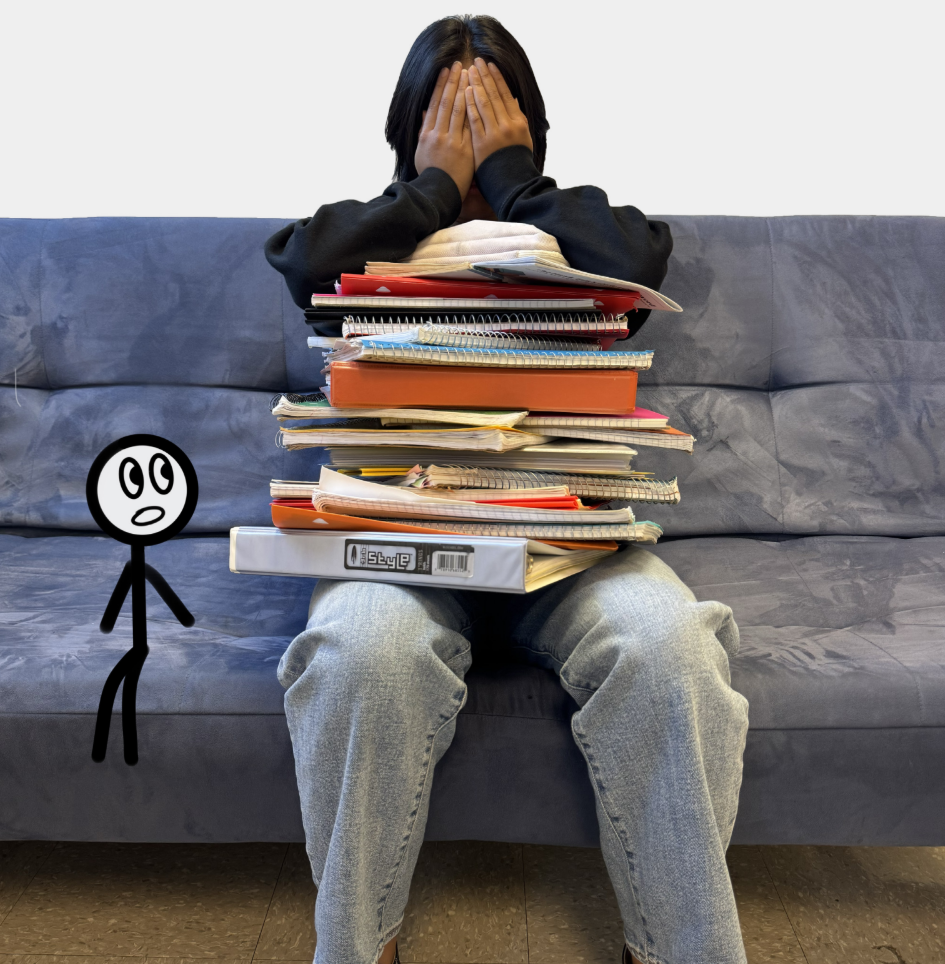
Zimmerman’s indecision reflects the lack of political engagement students are offered throughout the school day. Without proper education and conversation, students are missing out on a crucial step of their socialization, ultimately affecting their ability to think critically about political issues.
Leading up to the election, government teachers reminded their seniors to go out and vote. While this didn’t make every eligible voter choose to vote, it did succeed at ensuring many seniors were aware of the election. However, some students weren’t aware that they were eligible to vote if they were 17 and would turn 18 by the November election.
“For the past couple of months, I have tried to engage students and get them to vote,” Schneider said. “I feel that voting is an absolute privilege, and if you start young, you will be a supervoter. You’ll make it a habit and do it the rest of your life.”