A group of girls walks through the halls, wearing athleisure and holding matching water bottles. They talk about the upcoming state competitions for their respective sports and mention how that one B+ is going to tank their GPA. An almost identical group passes by just a few seconds later. Then another group. And another. This pattern isn’t just a coincidence; it’s how some people view Madison as a whole.
“[When I think of Madison, I think] white, blonde, smart, wealthy, probably athletic and a lot of proud Warhawk spirit,” German Lopez Rodriguez (’27) said.
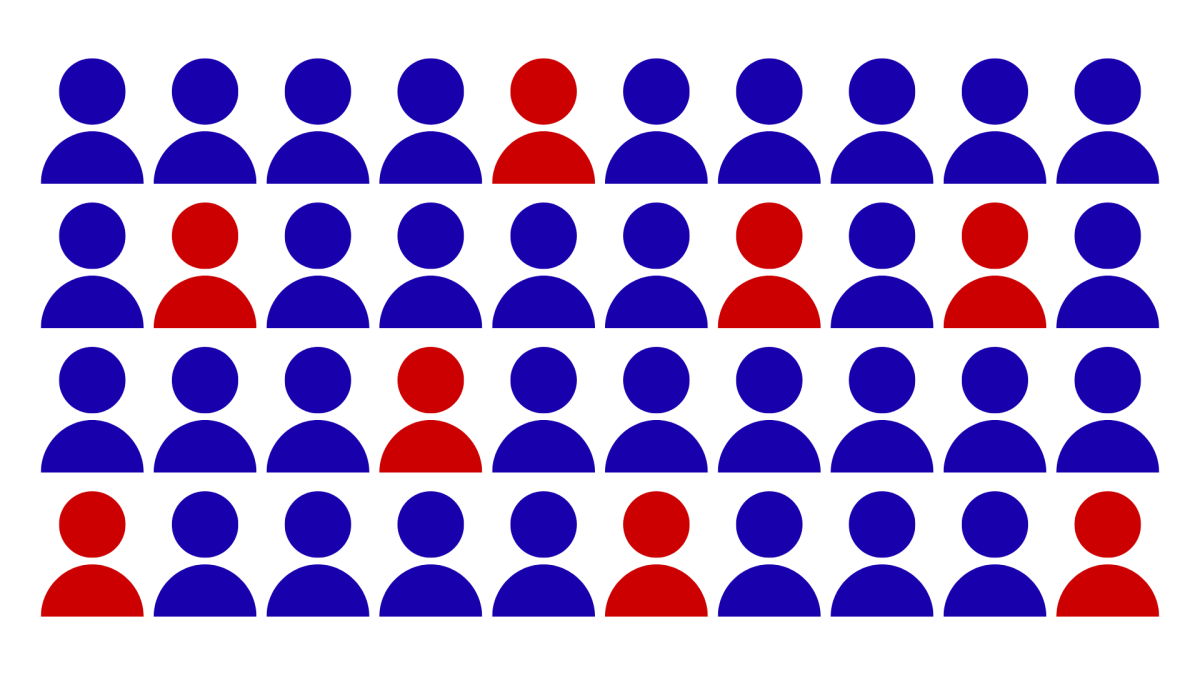
These descriptions aren’t inaccurate: Madison students reside in an affluent town, have above-average test scores and have been regional champions for football five years in a row.
“We’re always ranked in the top 10 statistically in like, everything,” special education teacher Willis Gardner (’14) said.
So yes, the “Madison image” that defines the school is well known across the county. This stereotype isn’t just a label; it has an impact that affects all students.
Culture:
Past segregational zoning laws and other socioeconomic factors have historically kept minorities out of Vienna, causing Madison to appear monocultural and overwhelmingly white compared to other schools in Fairfax County. This has left minority students with mixed feelings regarding the school’s culture and welcome. For instance, Madison’s exceedingly small Black community—making up around 2% of the student body—has varying experiences with community and belonging.
“When I think of Madison, I do see it as a PWI (predominantly white institution), where a good amount of the kids are relatively well off, sporty and white,” Chandler Ray (’27) said.
Ray has become accustomed to being one of a few Black students in her classes because she grew up in similar environments.
Maven Alexis (’27) has a different set of experiences.
“Being Black at Madison was definitely eye-opening,” Alexis said. “Coming from New York, where there is so much diversity and people who share culture and experiences with me, it was shocking to come here and barely see anyone who looks like me.”
Despite the small community, Black students have found success connecting with each other through the school’s Black Student Union (BSU). Madison had roughly the same Black population 11 years ago, though Gardner has noticed a big transformation in the club’s prominence.
“The BSU now is more active [and] out there and doing things, whether that’s athletics or different clubs…and it just wasn’t really like that before when I was a student,” Gardner said. “Now it’s almost like the entire Black community at the school.”
While progress has been made, some still wish the community were stronger.
“There are times where I wish the Black community and pride were larger because it’s nice to sometimes be able to talk about things that other Black girls or guys relate to,” Ray said.
Regardless of whether they feel a sense of community at Madison, many agree that the teachers and students are welcoming and inclusive.
“I’ve met many amazing people who never make me feel out of place,” Alexis said.
Some students from different cultural minorities, like the Asian American, Latino American and Arab American communities, have coped with their relatively small circles by sticking together.
“All of my friends are Asian,” Sofie Ma (’28) said. “It just happens naturally, and I feel more comfortable with them.”
She feels that certain parts of the Asian community at Madison share a certain culture and act differently in general.
“When I see people in the hallways, they are typically walking with people like themselves; people become friends with those who are similar to them,” Ma said.
This also applies to international students in Madison’s English Language Learners (ELL) program. When they first arrive at Madison, ELL students take specialized classes until they are proficient in English. When they graduate from the program, they are placed in classes with the rest of the school and are immersed in the stereotype that they might not fit in with. Oftentimes, these students can feel like cultural outcasts in the Madison way, especially when they first arrive.
“They already know how to interact with each other, and my way of interacting with others is different,” Melanie Morrison (’28), a student who moved from Chile last year, said. “Their way to socialize, their jokes, their way to make friends is different.”
Cultural differences have become barriers for some and bridges for others as ELL students try to navigate through different communities at Madison.
“There were some words I couldn’t pronounce [in English], making it difficult to communicate with [other students],” Bismar Lemus (’26), a student from Honduras, said in Spanish. “I’m more comfortable when I’m with people who speak Spanish because I can communicate better and savor the moment while speaking in my native language.
While students bring a variety of languages and cultures to the school, feeling truly accepted requires more than representation. Manuel Bellot (’26) from Bolivia takes an Academy class at Fairfax High School, where he has observed an interesting trend.
“Fairfax High School is much more diverse [than Madison], but it’s a lot less welcoming,” Bellot said. “I feel [Madison] is a safer environment.”
Although Madison is not the most diverse, it still offers a welcoming environment for students of different backgrounds.
“I don’t think I fit into the general culture of Madison, but I’m okay with that,” Alexis said. “I do believe that culture evolves, and I’ve made a place for myself here.”
Education:
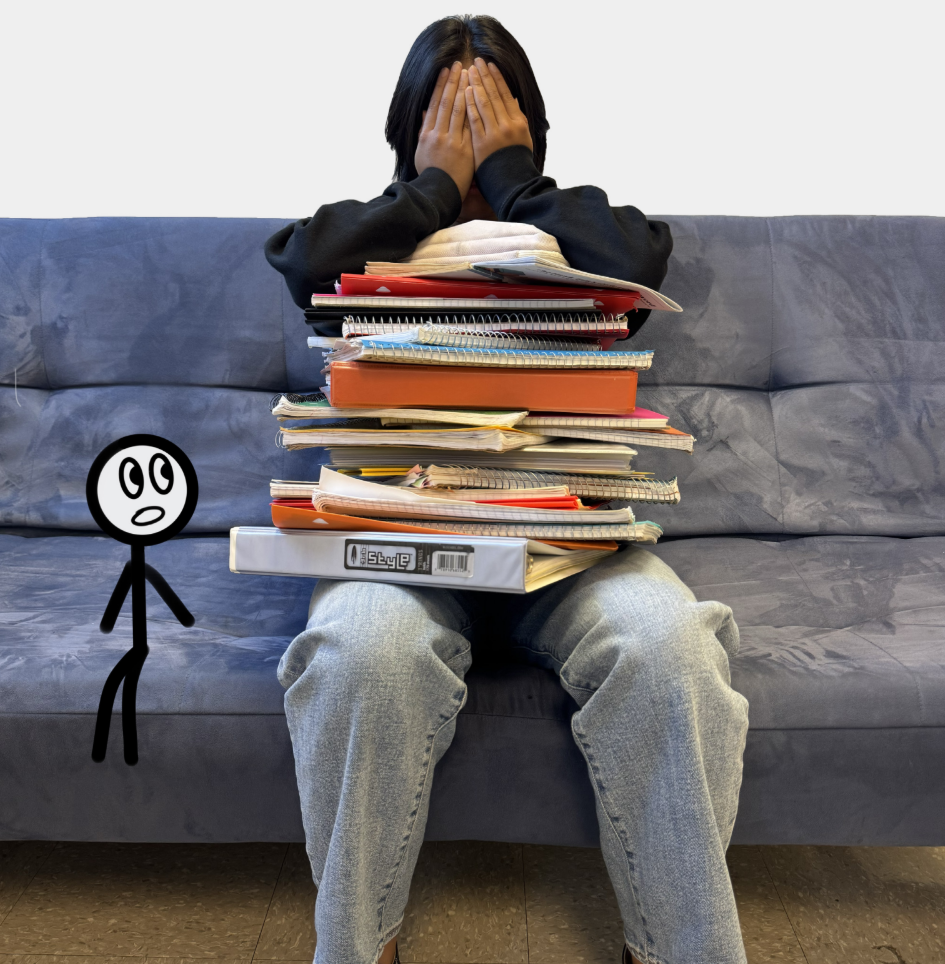
High achievement and academic success have become the norm. For students, the school’s impressive academic reputation has become a source of both pride and pressure.
Over 30 AP courses are offered, and the average PSAT score is over 130 points higher than the national average. Madison is currently ranked 10th in the state by “U.S. News”, a constant standing from previous years. With such high standards, some students feel the need to perform well and take the hardest classes possible, even if they don’t enjoy them or feel prepared. Some students feel like the competitive spirit values advanced classes over their desires.
“I feel pressured to take higher levels of classes like Calculus in an attempt to keep up with my peers even though I don’t enjoy math,” Aidan Lautz (’27) said.
While many students test their limits and see how much they can take on, counselors and teachers often encourage them to consider their workload and extracurriculars when choosing their classes. Some teachers also offer activities that demonstrate what a higher-level class would be like to help students make an informed decision about those classes. For example, some history teachers suggest that students take a quiz on an AP class chapter to get a better understanding of what the work is like for that class.
However, every year, more AP courses are available for upperclassmen as well as underclassmen. So even while encouraging balance, Madison is pushing their students to high achievement.
“It’s like a staircase and everyone here starts at the top straight away,” Elissar Murad (’27) said. “It has become normal.”
Despite the emphasis on balancing courses with personal life, academic pressure extends beyond Madison with Northern Virginia’s fierce competition. With prestigious colleges in their backyard, numerous students feel pressured to stand out on their college applications. Whether it’s creating a new club for leadership experience or taking as many AP classes as possible, students are constantly trying to excel.
“I’m surrounded by a competitive environment which can be good and bad,” Mia Nguyen (’27) said. “Everyone around me wants to push harder and help me strive and do my best and sometimes they can take it a bit far and it can be overwhelming.”
However, students’ idea of an average course load often depends on the social groups they spend time with.
“A lot of us self-segregate by what classes we take, so we naturally stay with the kids that take the same level of classes as us,” Jerome Nathan (’27) said. “I think that skews our view of what the average student is like.”
Not all students feel the need to take advanced classes, and many can find a wonderful and supportive community in their courses. Students can slow down and explore subjects more deeply, and enjoy the learning process without the pressure and competition.
“Being away from the pressure gave me an opportunity to discover what I actually wanted to do, rather than what I could push myself to do,” Miles Brezin (’26) said.
Sports:
The pressure to excel also bleeds into students’ extracurriculars. In affluent areas, such as Vienna, where sports are culturally encouraged, zealous parents can give rise to a youth sports industry, where students begin their training at a young age, starting through youth organizations like Vienna Youth, Inc. (VYI). As these sports-focused students matriculate into Madison, they not only make the athletic programs more competitive but also shape the culture into being more sports-centric.
“I feel pressured at Madison to do a sport because everyone does,” Julia Burns (’26) said. “It’s made it a lot harder to manage school itself because I feel the need to take up a sport even when I have a lot of schoolwork.”
This immense and long-standing social pressure to do sports has become embedded in the culture. Specifically within the athletics program, students struggle to find a spot on the teams without having played for their whole lives.
“It’s unfortunate that students can’t really explore other sports or play just for fun because of the rigorousness,” Maddie Michelbacher (’27) said.
As a result of the early exposure to sports within the community, some athletes have longstanding connections that can result in the exclusion of others.
“I think a lot of people throughout the years have quit due to the environment,” Kate Butler (’26) said. “The culture of being cliquey and unwelcoming has driven people away from certain sports, which has left people to give up their sport for the reason of not fitting in.”
Ultimately, while some students have found a strong community in the world of school sports, they are often faced with a rigorous challenge that requires tremendous time and effort to succeed.
Self expression:
Another way students may feel pressured to conform is in the realm of personal expression, especially through fashion. Stiff and well-established social norms can often deter some students from fully expressing themselves how they want to, pressuring them to fit into the status quo.
With many students involved in sports, it is common to wear athleisure to school. In addition, taking difficult classes and having time-consuming extracurriculars prompts students to wear more comfortable outfits, opting for sweatpants instead of jeans. When students who play sports get a chance to dress for themselves, there is still an overwhelming pattern that the stereotypical students seem to follow.
“When I first came here and went to the new student orientation, literally everyone was wearing Lululemon, Birkenstocks or these specific jeans and camisole combo, and I was very confused,” Alexis said. “That’s the first time in my life I’ve ever been so conscious of what I was wearing.”
The “uniform” also tends to lean into current fashion trends coming from social media platforms like TikTok and Instagram. The idea of what’s “in” versus “out” influences students’ purchases and what they wear. Even if they don’t care for the trend itself, they may be persuaded to buy certain clothing for the fear of not fitting in.
For many, clothes and fashion are ways to express their sense of self. When considering how LGBTQ+ culture often plays a role in self expression, some LGBTQ+ students might be wary to be open about their identity, an experience that is not unique to Madison. This comes from fear of discrimination or judgment based upon how one identifies, causing others to make assumptions before they’ve even met them.
“I’ve become selective with who does and doesn’t know about my sexuality,” Butler said. “For the most part though, I’ve had a positive experience at Madison in regards to people being supportive [of me].”
In many cases, students struggle to feel like they belong to the projected “Madison image”. High school can be a judgmental and alienating place, making some feel as if they have to distort or hide who they are in order to fit in. However, this place is meant to serve as an opportunity for students to find themselves and those who appreciate them. Every student can find a space at Madison, no matter how far from the “norm” it may be. At the end of the day, a projected stereotype says nothing about who students truly are; they are instead defined by how they rise above it.