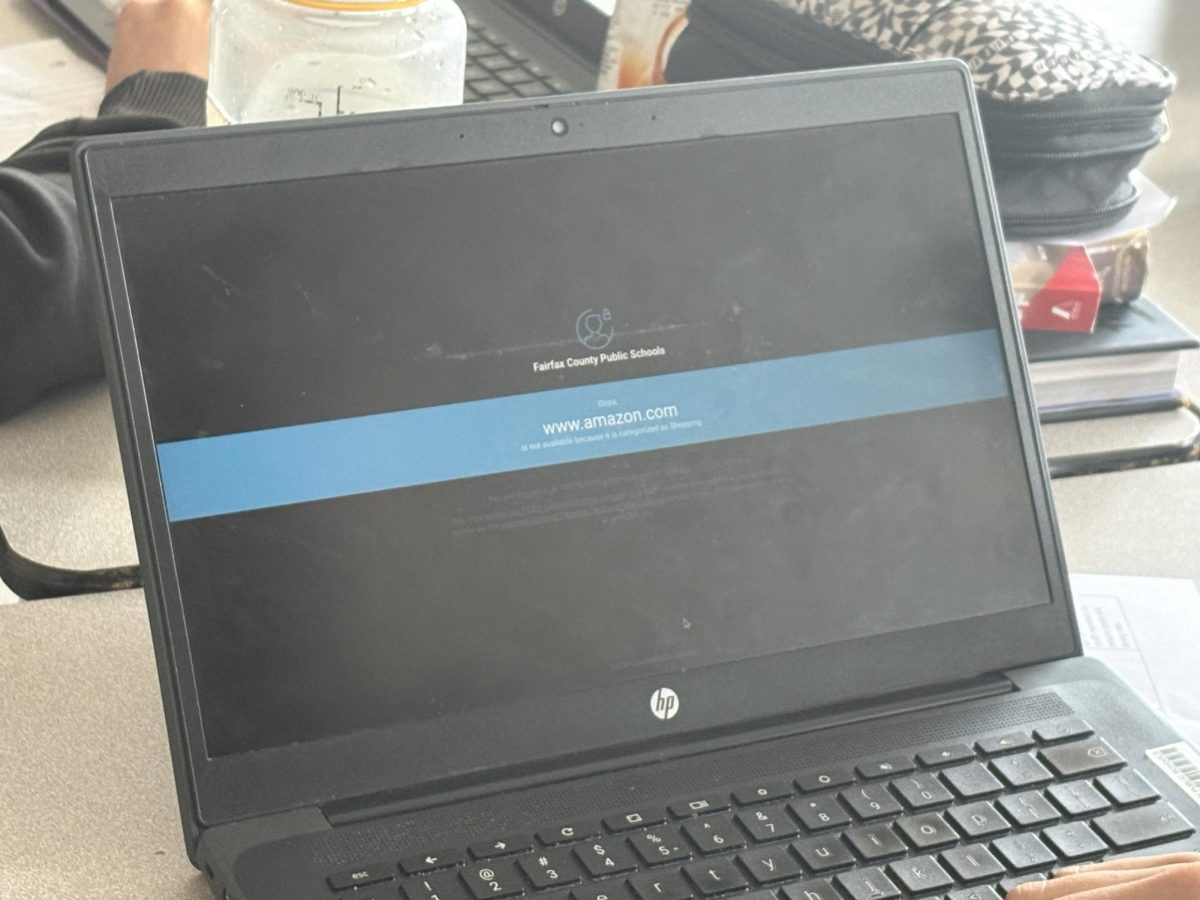

House Bill 1957 was passed by the Virginia General Assembly on May 2, 2025 and will go into effect in the 2026-2027 school year, creating significant changes to the Standards of Learning (SOLs). This bill will change the content students are assessed on and the cut score or passing score. Additionally, SOLs will now also be proctored only in the last two weeks of school.
“[Advocates of this bill] are citing certain studies that say the Virginia SOL is behind and the rigor of our assessments do not match the rigor in other states,” Principal Liz Calvert said.
Virginia typically updates SOL content standards every decade or so. While these updates often make content harder, this change has been particularly controversial. Many people are concerned because the standards are increasing at the same time as the pass/fail threshold. In the future, the passing scores will increase incrementally each year in accordance with the Phased-In Models passed by the Virginia Board of Education and the SOL scores will be mapped onto a 100-point scale to help clarify student achievement to parents. In the first three to four years of the updated scores, there will be a new category of achievement score called “approaching” that is between failing and proficient that could give schools some grace as the changes take place.
“We have very little details on what’s going to happen [because] these things were previously approved under a different governor [and] Abigail Spanberger hasn’t come out [with] what the plan is,” Assessment Coach Jennifer Frate said. “[Thus] the people that I report to in central office [have] been very hesitant to give us anything yet.”
There had been a prevalent rumor among academic websites and the wider public school community that the SOL scores would be worth 10% of students’ grades going forward in addition to the other changes. While this was a part of Bill 1957 when it was introduced, by the time it was amended and passed through the Virginia General Assembly, the bill no longer included any mention of an impact on students’ grades. However, Virginia is looking to move to a new test vendor for the end-of-year assessments on top of updating the standards, and as part of that, a new test will be created. In response to this move Virginia passed SB 200 on April 6, which states that end of year assessments will be worth 10% of students’ grades after the introduction of a new test. This grade requirement as of now is planned to be delayed until at least two years after the trial phase of the new test, so students are unlikely to see any of these changes for the next few years.
According to “Changes to Standards of Learning in Virginia,” “[FCPS] proudly hold[s] up our student performance as a national model. However, when cut scores change, many families will see their child marked as failing [the test].”
State education leaders are basing the cut score changes in part on the premise that student achievement in Virginia should be aligned with the “proficient” achievement level on the National Assessment for Educational Progress (NAEP). Most state standards align with a lower NAEP achievement threshold of “basic.” While the new rigor of the standards could be beneficial, failing SOL scores could lead to statewide decreases in score average. Since ranking and funding can depend on these scores, the SOL dates are being pushed back farther in the year to give teachers more time to cover the new materials added.
“I never really had an issue with [SOLs] a month before school ends… but I personally don’t like [SOLs moving to the last two weeks] because people just want to relax towards the end of the year there’s not much left to teach,” Nathan Ji (’29) said.
The new schedule will have benefits for the general curriculum–while also keeping students engaged as the year wraps up–but it might also make life harder for students who still need to pass their SOLs. Currently, Madison starts testing these individuals in late April, so they have time for remediation and the opportunity to take the test up to four different times. With the timeline pushed back, they might have less time for remediation, or some of their work might be pushed past the school year, making it necessary for students to come back over the summer for testing. While the path forward is unclear, Madison’s administration remains certain in their ability to handle the changes.
“But that’s what teachers do,” Calvert said. “We get kids through it.”