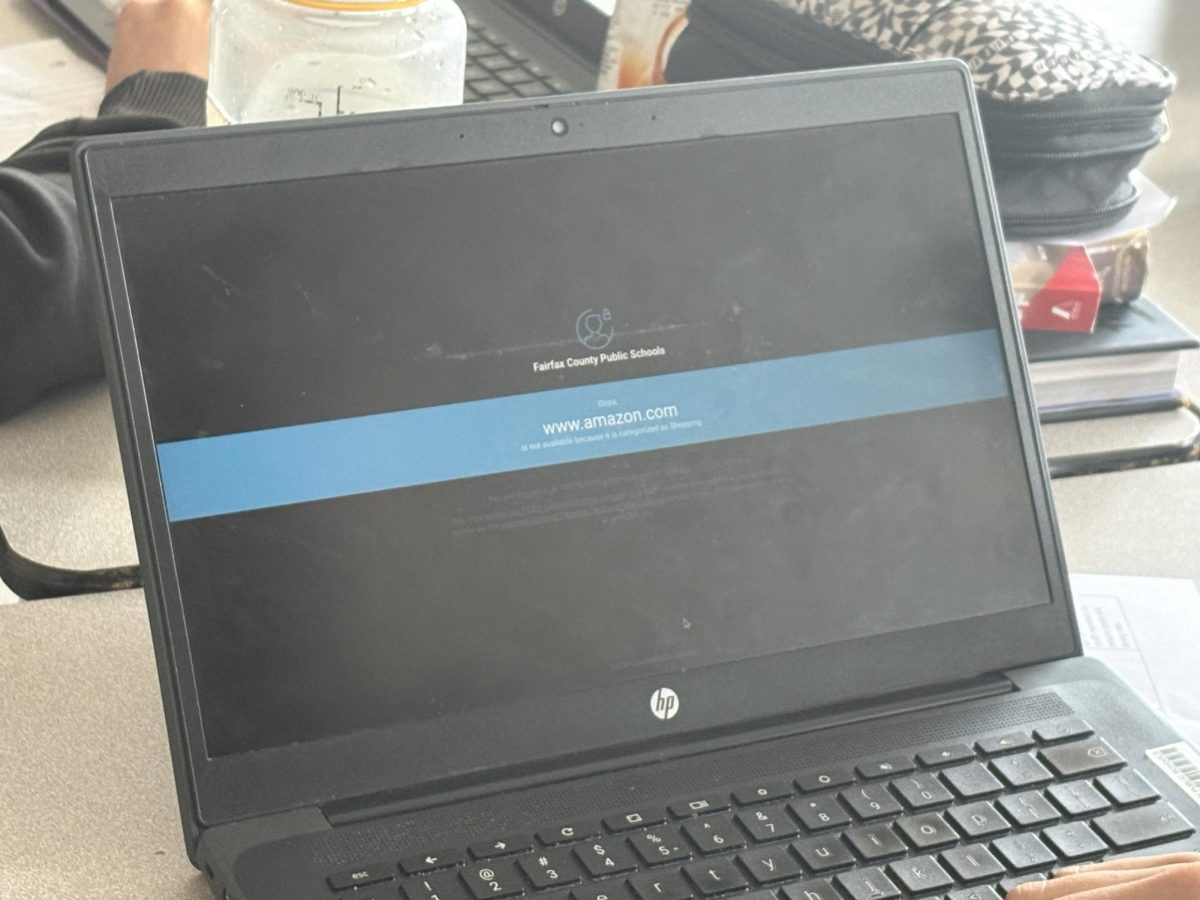
A student sits in class, researching a Spanish-speaking country for their language class. After scrolling through pages of Google search results, they finally find a website that seems to contain all the information they need. They click the link, and their screen goes black. The Fairfax County Public Schools logo appears, along with a message that the site has been blocked, categorized as “Travel.”
While FCPS has always been required by The Children’s Internet Protection Act (CIPA) to use filters to block access to inappropriate content on school issued laptops, in recent weeks, they have expanded their website restrictions beyond the blocking of video games, social media platforms, AI tools and mature websites. Students are now unable to access large portions of YouTube, entertainment platforms and even shopping and travel sites. While the intention is to keep students focused on their assignments, many of these platforms are valuable and sometimes essential resources for learning.
“I was trying to watch a video my history teacher recommended for the class, but it was blocked because it was on YouTube,” Caroline Burns (’28) said. “I had to wait until I got home to view it.”
Because students are becoming frustrated by the inconvenience, some have started bringing their own personal laptops to school, as FCPS is unable to place restrictions on devices they do not own.
“I’ve noticed an increase in personal computers just so people can play games and watch movies,” Allison Krogh (’28) said. “It’s honestly a bigger distraction than before.”
Since personal laptops are expensive, this trend can create a divide between students who are able to afford them and those who can’t, which turns access to information into an equity issue.
Overall, these new policies leave students struggling in a system that appears to prioritize control over accessibility. Due to the major role digital research plays in modern education, access policies will likely remain an important topic for members of FCPS as the school year continues.