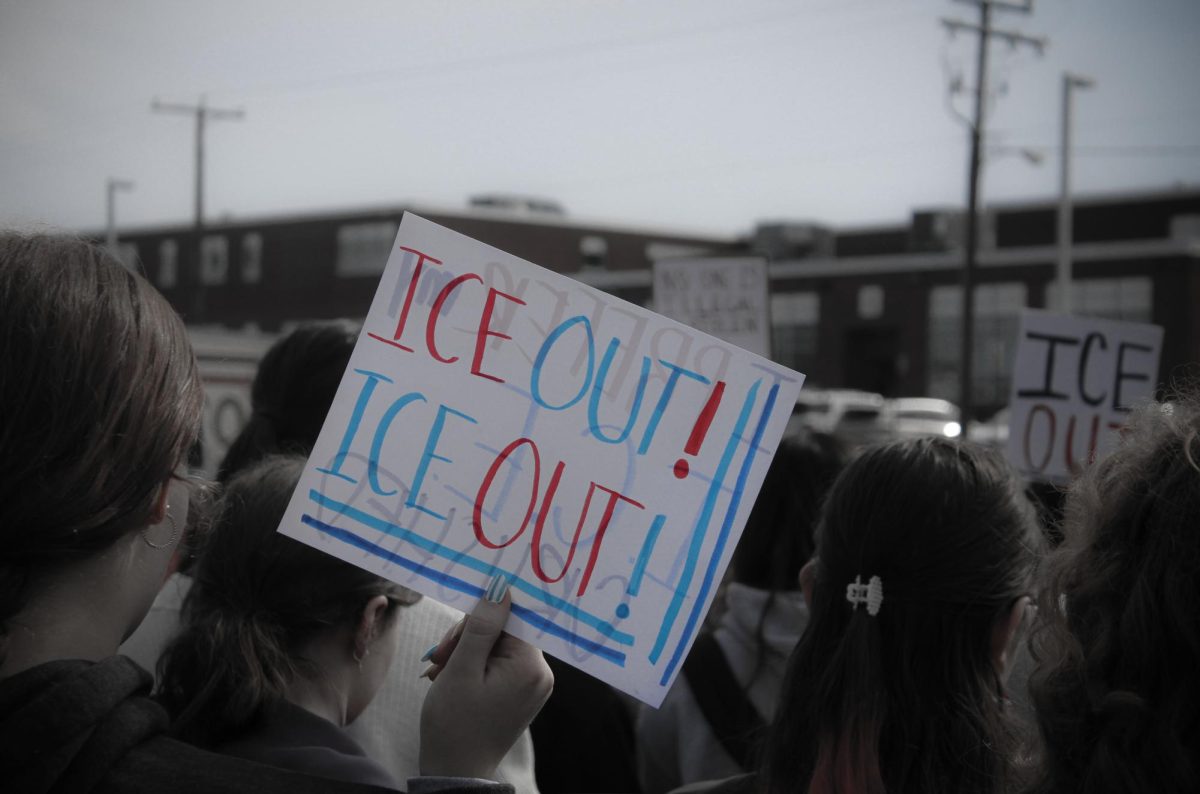
A group of around 100 students marched onto the football field, sporting “ICE Out” signs and listening to speeches protesting Immigrations and Customs Enforcement (ICE) overreach at 10:18 a.m., during Support Block, on Feb. 26. The walkout, first planned to be held Feb. 24, was initially cancelled by administration, who cited the Student Rights & Responsibilities (SR&R) regulations concerning freedom of speech.
According to Regulation 2612 of the SR&R, which deals with student freedom of speech, while students “have the right to express themselves through speech, assembly, distributing literature, and other ways,” they must “take place before or after school to ensure that academic activities are not disrupted.” Students wishing to plan such events must, additionally, submit a written request to their principal a minimum of five days before it is done, with the principal being required to meet with and respond to organizers within three school days. Administrators may assign an alternate location if required to protect student safety.
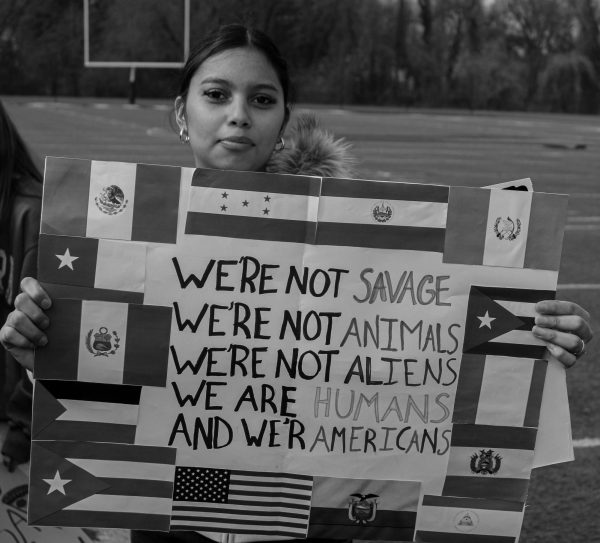
“If I’m not keeping [students] safe, I’m not doing my job right,” Principal Liz Calvert said. “I take that very seriously, so I was very excited that [the walkout organizers] decided not to walk outside [of school boundaries], because the minute you walk down James Madison Drive I can’t protect you from people who oppose your view.”
In an email to families Feb. 10, Calvert cited safety and security concerns and warned that students who do walk out during the school day will be marked as unexcused and face disciplinary action. The original organizers, however, decided to go through with the walkout, despite administration disapproval, initially planning an off-campus march down Nutley Street and James Madison Drive. Safety concerns raised by the School Resource Officer about potential counter-protestors or police involvement ultimately caused the walkout to occur at the football field, however.
“The things people who tried to organize this had to jump through in order to make it happen is insane,” Bowen Cuthbertson (’27) said. “Like, having to reschedule and working it out with the school kind of defeats the point of a protest. Like having to get a protest approved in and of itself is just…politically controlling.”
School administrators were monitors at the walkout, checking posters for appropriateness and maintaining a presence. Calvert acknowledges finding a balance is challenging.
“I struggle with regulations that stifle student voice,” Calvert said. “It is [however] absolutely critical we have guidelines and guardrails about how to ensure a safe environment, ensure voices are heard, ensure there’s not conflict after that.”
Regardless of the barriers the organizers faced, students expressed hope that this walkout might effect some change.
“Doing something is better than doing nothing, right?” Julianna Cui (’26) said. “So if this is the most that we can do as students, then participating is important.”
Attendees and speakers also voiced dissatisfaction with national immigration policies and administration rhetoric.
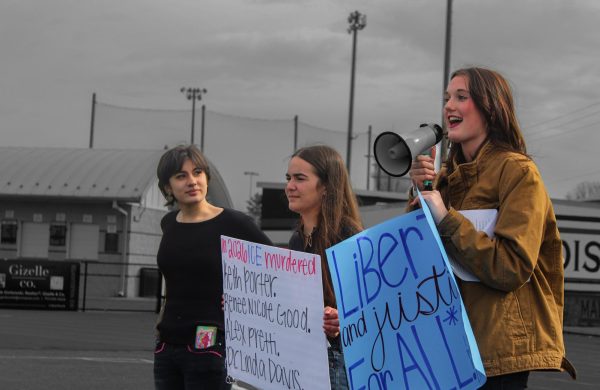
“We [immigrants] are part of [this country’s] foundation,” Ksenia Koltovich (’26) said. “And no matter how often our contributions are erased or questioned, that truth does not change. [In Russian:] we will not disappear for your comfort.”
Haddad finished the speeches by calling on students to continue doing such actions.
“It is very brave to walk out of school against the rules, it shows your support and your passion for this issue,” Halah Haddad (’26) said to the crowd. “So keep being loud, keep causing discomfort, keep standing up for what is right. Stand as a community, and make your voice heard. And never, ever stay silent. As Desmond Tutu once said, ‘If you are neutral in the face of injustice, you have chosen the side of the oppressor.’”